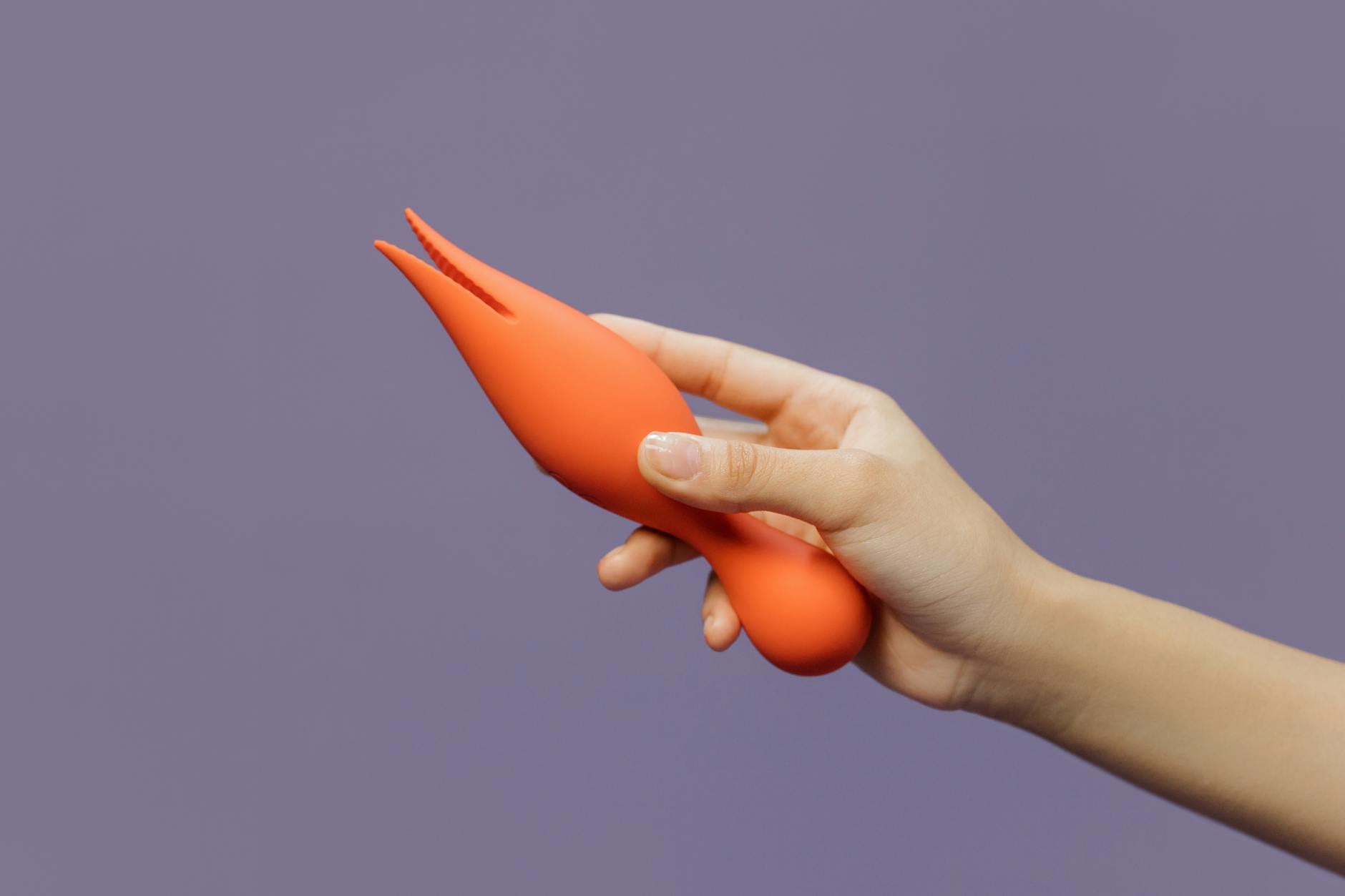
Let's talk about the intensity trap
You bought a clitoral vibrator. You turned it on. And immediately hit a wall. Either the lowest setting feels like someone's tapping you with a toothbrush, or even the gentlest pattern feels like your nerves are being sandpapered. There's no middle ground, and you're sitting there wondering if something's wrong with your body or with the toy.
Neither. You're just in the calibration phase. And honestly, this is where most people give up on lemon vibrators entirely, which is a shame because the intensity mismatch is usually fixable with three small tweaks.
Why intensity feels wrong at first
Your clitoris is wildly sensitive. We're talking thousands of nerve endings concentrated in a structure about the size of a pea. But sensitivity isn't the same as responsiveness. A vibrator that works brilliantly for someone else might feel completely off-key for you, and that's usually because of one of these things.
First, some bodies have what I call sensory gatekeeping. Your nervous system is literally filtering out stimulus before your brain even registers it. This happens more often if you're anxious, distracted, or in your head about whether you're doing it right. The second reason is physical. The angle of approach matters enormously. A pattern that feels perfect when the vibrator is slightly off to one side might feel numb when it's centered. Third, arousal level changes everything. The same pattern at a 3 out of 10 arousal feels completely different at a 7 out of 10.
Most people don't account for any of these variables. They just assume the vibrator's wrong and move on.
The suction advantage with lemon vibrators
This is where the lemon clitoral vibrator design shifts the game. Unlike traditional bullet vibrators or wands that rely purely on high-frequency oscillation, lemon vibrators use air-suction technology. Instead of vibration hammering directly on the tissue, suction creates a gentle seal and applies rhythmic pressure in a way that feels radically different.
What does that mean for intensity? The same pattern number on a lem vibrator feels softer and more diffuse than a traditional vibrator. It's not the pattern intensity that's changing. It's the mechanism. Suction distributes stimulation across a wider surface area instead of concentrating it at a point. So if you've had trouble with vibrators feeling too intense in the past, a lemon sucker might actually be the first one that clicks for you.
The flip side. If you've been using suction toys exclusively and you try a traditional vibrator, it'll feel jarringly sharp by comparison.
Start lower than you think
Here's the honest thing. Most people start on pattern 3 or 4 when they should be starting on pattern 1. Pattern 1 on a lemon clitoral vibrator is genuinely gentle. It's exploratory. It's the speed you use to map where you're most sensitive.
I recommend spending a full five minutes on pattern 1 before you even consider moving up. This isn't about willpower or being "patient." It's about neurological priming. Your nervous system needs time to recognize the stimulus as pleasure instead of just sensation. The first few minutes are often just your body going "oh, that's happening." Your arousal builds in the next five minutes. That's when intensity actually matters.
Wait. Then move to pattern 2. Spend another five minutes. Notice the difference. Can you articulate what changed? Did the sensation travel? Did your response deepen? Did it feel better or just different? That distinction is everything. Better means you've found the right speed for this moment. Different means keep exploring.
The angle and pressure game
I cannot overstate how much the angle of contact changes intensity perception. Light pressure at a 45-degree angle often feels more intense than firm direct pressure. Your clitoris isn't a button you press straight on. It's more like a landscape, and different angles hit different nerve clusters.
Start with the tip of the vibrator against you at barely any pressure. Almost floating. Let the suction (if you're using a lemon vibrator) create the seal, don't add pressure. Then shift angle slowly. Move it slightly left, slightly right, move higher toward your pubic mound, move lower toward the opening. Spend 30 seconds in each position and notice if the sensation changes.
Most people discover that their most responsive spot is NOT the direct center. It's off to one side, or higher than expected. Once you know that? You can find the right intensity pattern for that specific angle. Suddenly pattern 1 isn't too soft and pattern 3 isn't too much. Pattern 2 is perfect, and you were just aiming at the wrong location the whole time.
Build arousal first, intensity second
The biggest mistake I see is people treating vibrator intensity like a volume knob they need to crank up. In reality, your arousal level is the volume knob. The vibrator is just the song selection.
Spend 10 to 15 minutes on non-vibrator foreplay before you turn anything on. Touch yourself. Think about something that gets you going. Let your body warm up. Your genital tissue will become more engorged, more responsive, more sensitive in the actual pleasure way instead of the overwhelming way. Then introduce the vibrator.
If you're starting on pattern 1 while already aroused, it'll feel like enough. If you start on pattern 1 in a neutral state, it'll feel like nothing. Same pattern, completely different experience. This is why people who use vibrators solo often report much better results than people using them partnered with someone they're not that into yet. Solo, you can take the time to actually build arousal. Partnered, there's often pressure to "perform," and that kills the whole calibration process.
Pacing patterns, not just intensity levels
Most vibrators have different patterns. Nancy's Lemons lemon vibrators have several, and they're not just intensity variations. Pattern 1 might be steady, pattern 2 might be a rhythm, pattern 3 might be a pulse. These feel completely different, and sometimes a pattern that feels wrong at intensity level 2 becomes perfect when you shift to pattern 4.
Don't get locked into thinking "I need to find the right intensity number." Sometimes the answer is finding the right pattern. Spend time cycling through all of them at a low number before you move to a higher intensity. You might find that pattern 5 on level 1 gives you something completely different from pattern 2 on level 3, and one of those becomes your favorite.
When numbness is the actual problem
If you've cycled through patterns, angles, and arousal levels and you still feel almost nothing, that's different from the intensity being wrong. That's potential sensory numbness, and it usually has a cause. Certain medications (SSRIs, birth control, some blood pressure drugs) can genuinely dull sensation. So can pelvic floor tension, anxiety, or simply being in your head about whether it's working.
If nothing's happening after 20 minutes of genuine exploratory play, don't assume the vibrator's broken. Consider whether something else is muting sensation. How to Use a Lemon Vibrator When Antidepressants Numb Your Sensation goes deep on medication-related numbness specifically. How to Use a Lemon Vibrator When Your Pelvic Floor Is Tight and Tense covers tension patterns that kill sensation.
But if you've ruled out those factors? You might actually need a different toy altogether. Some bodies respond better to wands. Some prefer clitoral vibrators. Some want something with a broader head.
Trust the data from your own body
The reason I'm spelling all this out is because the internet is full of advice like "most women prefer pattern 3" or "start at medium intensity." That's useless for you. Your body is not the average woman in some survey. Your nervous system, your anatomy, your arousal patterns, your sensory thresholds are singular.
Keep a one-sentence note after each session. "Pattern 2 felt better today than pattern 1. Angle matters more than intensity. Five minutes in, not immediately." Track this for a week. You'll see patterns in the patterns. You'll notice that maybe you always prefer left angle, or that pattern 4 only works when you're already highly aroused, or that the lemon vibrator works better on certain days of your cycle.
That data is worth more than any advice column because it's about you. Your pleasure. Your actual wiring. Not someone else's baseline.
FAQ
Why does the same pattern feel different depending on what I'm thinking about?
Your brain is part of your nervous system. Distraction literally filters stimulus before sensation reaches pleasure. If you're worried about performance, whether you're doing it right, or what time it is, your nervous system deprioritizes the vibrator sensation and sends it to a background thread. When you're genuinely focused on sensation or fantasy, your brain amplifies it. Same vibrator, same pattern, completely different neurological processing.
Can I damage my clitoris by using too much intensity?
Not from a vibrator. Your clitoral tissue is tougher than you probably think. What high intensity can do is create temporary desensitization, where your nerves essentially get fatigued and stop responding for a few hours or days. If you notice you're needing higher and higher intensity to feel anything, that's a sign to dial it back for a few days and let your nervous system reset. But actual tissue damage from vibrator use is extremely rare.
What if I need intensity at pattern 1 but want stronger stimulation later?
Your nervous system adapts and becomes less responsive to constant stimulus. This is called habituation. If you're using the vibrator every day at the same pattern, your nerves stop registering it as novel. Solution: vary your patterns, take breaks, or build in rest days. You don't have to use the highest intensity to stay interested. Sometimes the freshness of switching patterns does more than cranking the number up.
Does the lemon vibrator feel different from other clitoral vibrators?
Yes. The suction mechanism distributes pressure differently than pure vibration. Most people find it feels gentler initially, which is why it's often better for people with intensity sensitivity. But gentler doesn't mean less effective. The sensation is just broader and less point-focused. Some prefer it. Some want that sharp, concentrated buzz of a traditional vibrator. Neither is wrong. It's about matching the toy to your sensory preference.
I feel guilty enjoying intense vibration. Is that normal?
Completely. Many people have absorbed messaging that their pleasure should be subtle, quiet, controlled. Intense sensation feels out of bounds. But liking intensity is as normal as preferring gentleness. Your nervous system is wired to respond to what it responds to. If that's high-intensity patterns, that's just information about your body, not a moral statement. How to Use a Lemon Vibrator When You Feel Guilty About Pleasure goes deeper on this specific block.
How do I know if the vibrator is actually too intense or if I'm just nervous?
The difference is time. Nervousness usually softens when you keep going and your body realizes nothing bad is happening. True overstimulation gets worse. If you try a pattern for two minutes and feel overwhelmed but curious, keep going. If you try it and feel immediate pain or strong discomfort that doesn't shift, that's the vibrator being too intense for your current state. Switch down. Nervousness is normal. Pain is information.
The recalibration happens with patience
Intensity matching isn't something you solve in one session. Your body changes. Your arousal pattern shifts depending on stress, cycle, relationship status, and a hundred other variables. The lemon vibrator you figured out in January might need recalibration by June. That's not failure. That's just the reality of having a nervous system that responds to context.
Start low. Notice angles. Build arousal first. Try patterns. Track what works. Adjust. Repeat. That's not boring. That's actually the opposite of guessing. That's you getting genuinely intimate with how your own pleasure actually works. Which is the whole point.